
GUIDE / CRACKS
Cracks in a new house.
Which ones matter.
Almost every new home has a few fine cracks. Most are plaster shrinkage and easy to repair; a few point to movement that needs an engineer. Here is how to tell them apart, measure them, and report them while the developer is still responsible.
SHORT ANSWER
Most are hairline. Some are not.
Most cracks in a new Malaysian house are hairline cracks (under about 1 mm) in plaster or skim coat, caused by shrinkage as the cement dries or by the joint between brick walls and the concrete frame. They are cosmetic but still worth reporting during the defect liability period. Cracks wider than about 5 mm, cracks running diagonally from the corners of doors and windows, stepped cracks through brickwork, cracks in beams, columns or floor slabs, and cracks that keep widening are signs of movement and should be assessed by a professional engineer.
- Under 1 mm: cosmetic. Fill, re-skim and repaint.
- 1 to 5 mm: record, monitor and report. The cause matters.
- Over 5 mm, growing, diagonal or in the structure: ask an engineer.
- Always: photograph with a ruler and date it.
01 / COMMON CAUSES
Where new-home
cracks come from.
- Plaster and skim-coat shrinkage. Cement plaster shrinks as it cures. Fine, random 'map' cracks or short straight cracks on walls and ceilings are typical, and often show in the first months after handover once the unit is aired and air-conditioned.
- Brick-to-concrete joints. Brick or block walls and reinforced concrete columns and beams move differently. A straight vertical crack where a wall meets a column, or a horizontal one just under a beam, usually follows that joint. Wire mesh across the joint before plastering reduces it.
- Corners of openings. Doors and windows concentrate stress. Short diagonal cracks from frame corners appear when lintels or corner reinforcement are inadequate.
- Ceiling boards and cornices. Plasterboard ceilings crack along board joints and cornices open at corners. Usually finishing, not structure.
- Settlement on landed homes. The car porch, apron and perimeter drain can settle differently from the house, opening a crack at the junction.
- Heat. West-facing walls, parapets and flat roofs heat and cool every day; this movement cracks render and parapet joints.
02 / READING A CRACK
Width, direction
and change.
| Category | Typical width | What it usually means |
|---|---|---|
| 0 · Negligible | up to 0.1 mm | Hairline. Cosmetic, filled when repainting. |
| 1 · Very slight | up to 1 mm | Fine cracks, treated in normal redecoration. |
| 2 · Slight | up to 5 mm | Easily filled; doors and windows may stick slightly. Find the cause. |
| 3 · Moderate | 5 to 15 mm | Needs opening up and repair; frames may stick; services may be affected. Engineer. |
| 4 · Severe | 15 to 25 mm | Extensive repair; distorted frames, sloping floors. Engineer. |
| 5 · Very severe | over 25 mm | Major repair or rebuilding; risk of instability. Engineer urgently. |
The categories were developed in the UK for masonry buildings and are widely used by engineers and surveyors as a common language. They are not a Malaysian legal standard, and width is only one sign. Direction and location tell you more:
- Random hairline cracks in plaster point to shrinkage.
- A straight line at a column or under a beam points to the brick-to-concrete joint.
- Diagonal cracks from opening corners, wider at one end, or stepped through brick joints point to movement or settlement. Monitor and get advice.
- Cracks in beams, columns or slabs, especially with rust staining or exposed steel, need an engineer without waiting.
03 / WHAT TO DO
Measure it. Date it.
Watch it.
- Photograph with a scale. Hold a ruler or a crack-width card against the widest point.
- Mark the ends lightly in pencil with the date. If the crack grows past the mark, you will see it.
- Re-check after a few weeks and after heavy rain or a dry spell. A crack that grows, or reopens after repair, is active.
- Report it in writing during the defect liability period, with the photo, location and width.
- Bring in an engineer for anything in category 3 or above, or anything in the structure. A visual defect inspection records and flags; it does not calculate loads or diagnose structural movement.
04 / THE REPAIR
Filling is fine.
If the cause has stopped.
For shrinkage cracks, the usual developer repair is to rake out or V-cut the crack, fill it with a flexible filler or patching plaster, sometimes bridge it with fibre mesh, then skim and repaint the whole wall panel so the patch does not show. Check the repair at an angle under light: you should not see a patch outline.
A crack that comes back in the same place after repair is telling you the cause is still active. Report it again, inside the defect liability period, and ask for the cause to be looked at, not just the surface.
REAL EXAMPLES
Cracks from
a real report.
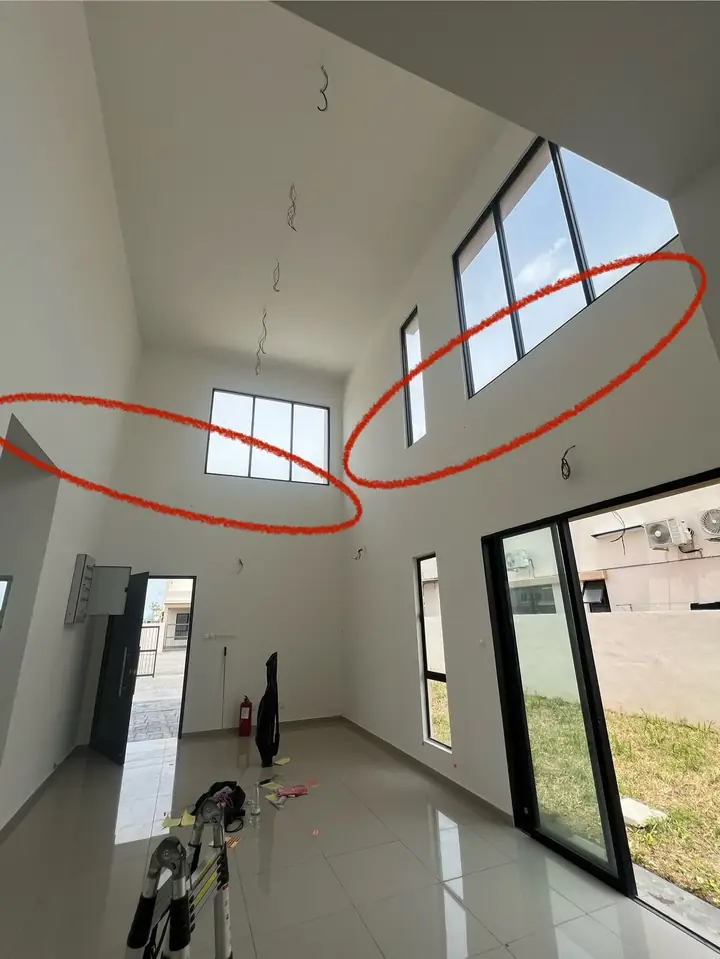
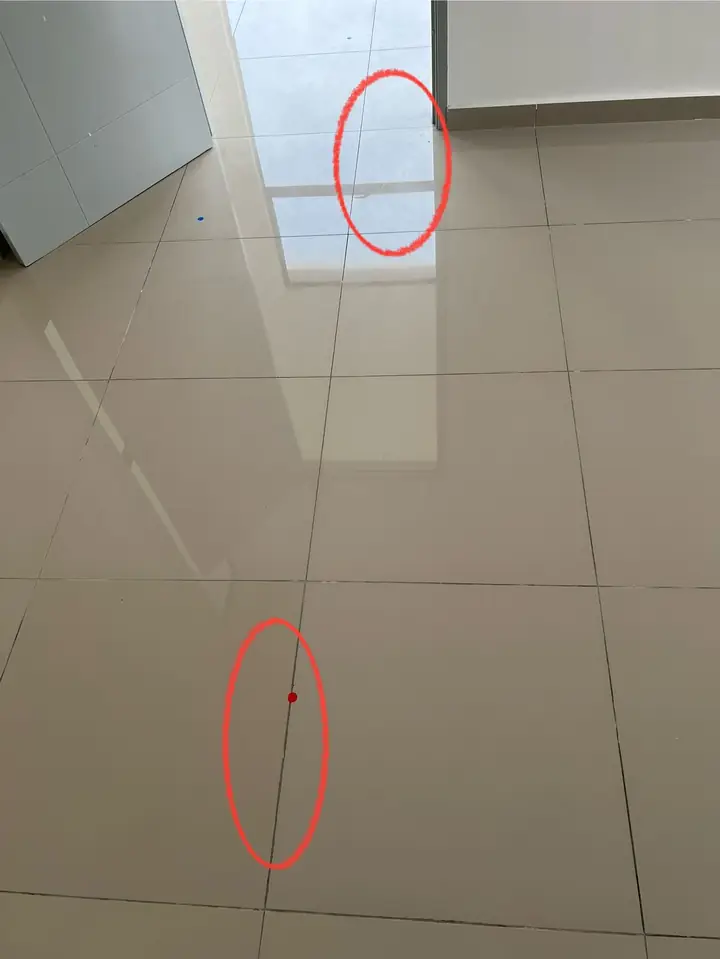
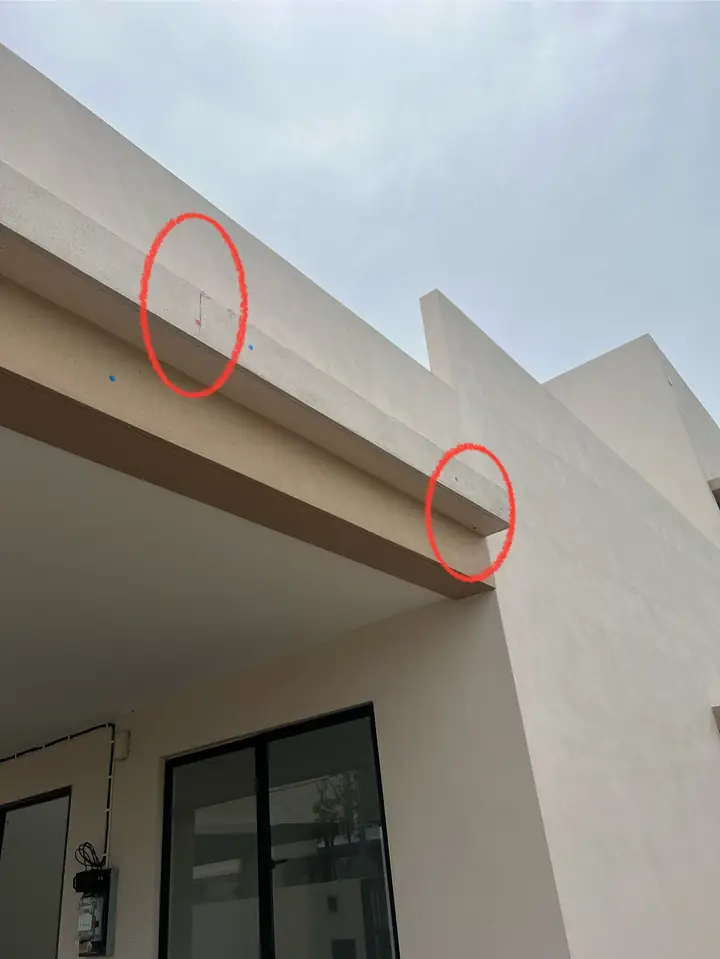
One new double-storey house we inspected in October 2026 had 18 crack items: on walls, beams, window hoods, a boundary wall and a floor tile. Most were hairline. We record them all and flag anything that needs an engineer.
QUESTIONS
Quick
answers.
Something else on your mind?
We're a message away.
Are hairline cracks normal in a new house?
Fine hairline cracks in plaster and skim coat are common in new Malaysian homes and are usually caused by shrinkage as cement materials dry. They are cosmetic, but they are still defects you can report to the developer during the defect liability period, and are typically repaired by filling and repainting.
When is a wall crack serious?
Treat a crack as serious if it is wider than about 5 mm, runs diagonally from the corners of doors or windows, steps through brick joints, appears in a beam, column or floor slab, shows rust staining, keeps widening, or comes with doors and windows that start to stick. These need assessment by a professional engineer.
Will the developer repair cracks?
Cracks that appear during the defect liability period, commonly 24 months from vacant possession, and are reported in writing are normally repaired by the developer under the standard sale and purchase agreement. Report them with photos, location and width, and re-check the repair before signing it off.
Can I just paint over the cracks?
Not before they are recorded and reported if you are still inside the defect liability period: painting removes the evidence. For a crack that may still be moving, paint also hides the change you need to see.
Does a defect inspection assess structural cracks?
Our inspection is visual. It records cracks with photographs, location and approximate width, and flags anything that looks structural. Diagnosing structural movement needs a professional engineer, and the report says so when it applies.
SOURCES & LIMITS
Where this
comes from.
Crack categories after BRE Digest 251, Assessment of damage in low-rise buildings (Building Research Establishment, UK), widely used by engineers and building surveyors. Defect liability terms: the standard Schedule G and H agreements. This guide is general information for Malaysian homebuyers, not legal advice. Your own sale and purchase agreement (SPA) sets the exact periods and procedure; for a dispute, speak to a lawyer or the tribunal.
Not sure about a crack?
We record every visible crack with its location, width and photographs, and flag anything that needs an engineer. Send us your property details for a quotation.
Book an inspection